


Vitaly Tur
PhD in Linguistics and co-founder of the international PR and Marketing agency Smartcontent. Senior Lecturer in Language of Advertising. Strongly focused on developing content that resonates with the target audience, drives engagement, and ultimately leads to conversions. Frequent speaker at linguistic conferences and events around the world.
smartcontent > Blog > How to Improve Brand Visibility in AI Search Engines: A Practical Guide
How to Improve Brand Visibility in AI Search Engines: A Practical Guide


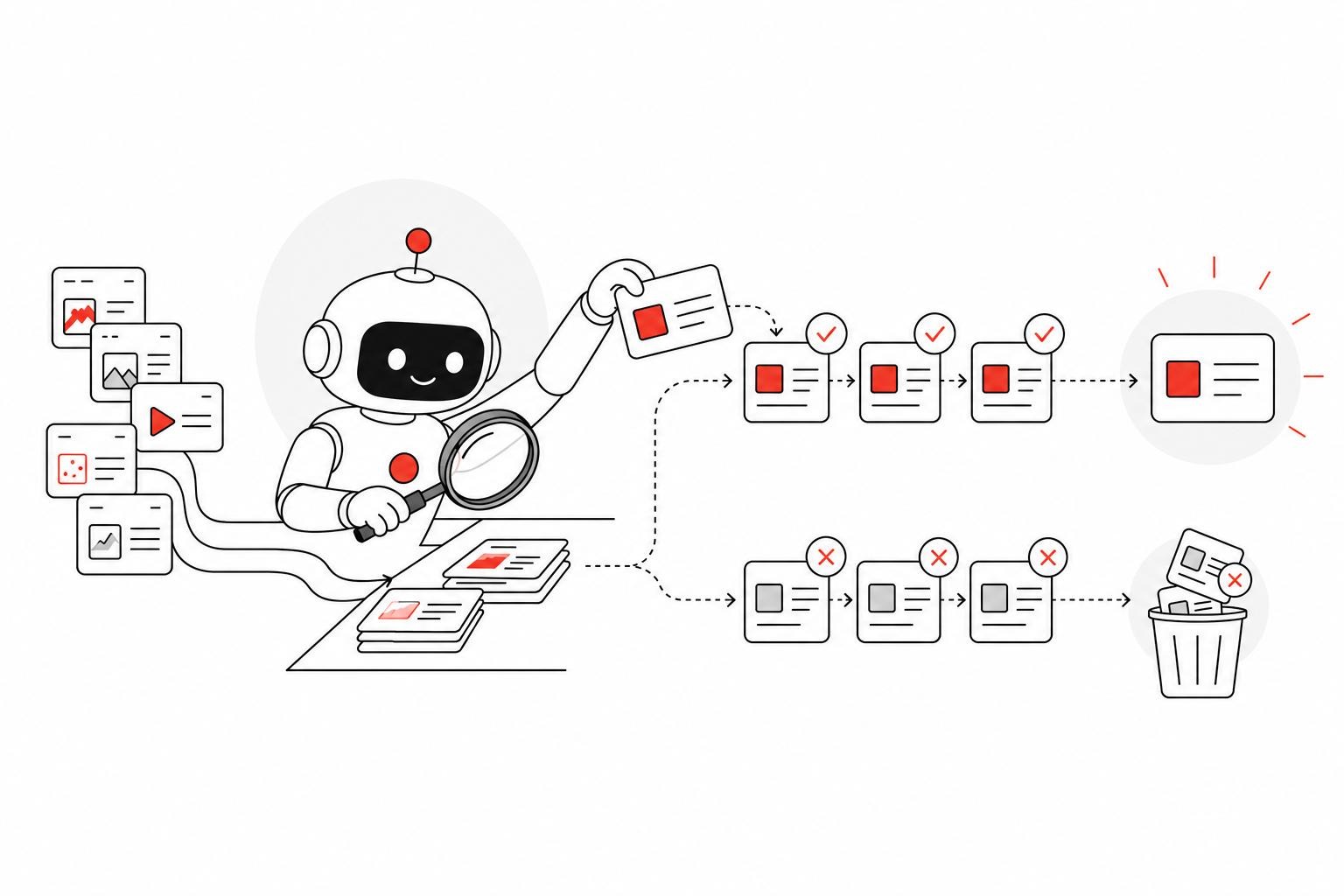
More and more people are using ChatGPT, Gemini, Claude, Perplexity, and Google’s AI-powered search experiences to research products, compare vendors, and find answers to business questions.
This creates a new challenge for companies. If potential customers increasingly get recommendations directly from AI systems, how do you make sure your brand becomes part of those answers?
This is where AI visibility comes in.
At its simplest, AI visibility refers to a company’s ability to appear in AI-generated responses when users ask questions related to its products, services, expertise, or industry. But unlike traditional search visibility, AI visibility is not only about rankings. It is about whether AI systems can discover, understand, trust, and cite your brand.
The challenge is that AI visibility remains a new and often misunderstood discipline. There is no universally accepted playbook, and many popular recommendations are based more on speculation than evidence.
In this article, we’ll look at what current research actually tells us: where AI systems get information from, what appears to influence AI visibility, what companies can do today to improve it, and where important uncertainties still remain.
Where AI Systems Actually Get Their Information
AI systems do not all use the same sources, and they do not simply mirror Google results. That is the first important thing to understand.
Yes, large language models have knowledge from training. But for many search-like tasks, the more important question is what they retrieve in real time — and from where.
Google has been unusually transparent about this. Its AI Overviews and AI Mode rely on the same core Search infrastructure that powers traditional search. They use retrieval-augmented generation (RAG), pull from Google’s search index, and may perform multiple related searches behind the scenes before generating a response. In practice, this means that pages generally need to be indexed and eligible for snippets before they can become sources in Google’s AI-generated answers.
Other AI platforms work differently.
OpenAI’s ChatGPT Search can retrieve information from the web and display cited sources alongside answers. OpenAI also distinguishes between different crawlers: GPTBot is used for model training, while OAI-SearchBot is used to discover content that can appear in ChatGPT Search results. For ecommerce companies, OpenAI has introduced dedicated product feeds that can make products discoverable directly inside ChatGPT.
Perplexity also uses a retrieval-first model. It uses dedicated crawlers to gather information from across the web. Anthropic’s Claude similarly supplements model knowledge with live web search for many queries.
The key point is that AI search is not just «Google in a chat interface.» Academic research has found surprisingly low overlap between the sources used by some AI systems and those that appear in Google’s search results. The source mix also changes by intent: research from the University of Toronto found that AI systems tend to cite earned media more often for informational and consideration-stage queries, while brand-owned sources become more prominent for transactional searches.
For companies, the implication is simple: AI visibility cannot be managed through a website alone. A technically strong site still matters, but AI systems also learn about brands through media coverage, industry publications, business profiles, reviews, videos, community discussions, and other third-party sources. Visibility increasingly depends on a company’s entire information footprint, not just its owned channels.
What Actually Influences AI Visibility
If there is one thing current research makes clear, it is that there is no single AI visibility factor.
Unlike traditional SEO, where rankings can often be explained through a relatively familiar set of signals, AI-generated answers appear to be shaped by a combination of technical accessibility, source credibility, content structure, entity recognition, and freshness. Different AI systems weigh these factors differently, but several patterns are beginning to emerge.
Accessibility
The first is surprisingly traditional: AI systems can only use content they can access.
Google has stated that visibility in AI Overviews starts with the same foundations as visibility in Search. Pages generally need to be crawlable, indexed, and eligible for snippets before they can appear as supporting sources in AI-generated answers. Similar principles apply to ChatGPT Search and Perplexity, both of which rely on dedicated crawlers and retrieval systems. In many cases, AI visibility problems are simply indexing or access problems in disguise.
Earned media and source credibility
Beyond accessibility, however, the evidence points to a much broader set of signals.
Multiple studies point in the same direction. A Muck Rack analysis of over one million AI citations found that 82% came from earned media sources. A separate study by Fullintel and the University of Connecticut, presented at the International Public Relations Research Conference, found that 89% or more of links cited by AI engines were earned, unpaid coverage.
This does not mean company websites have become less important. Rather, it suggests that AI systems often seek external validation. In other words, what others say about your company may increasingly matter alongside what your company says about itself.
Quotability
Another recurring pattern is what researchers sometimes call quotability.
AI systems appear more likely to cite content that is easy to extract and reuse. Pages that contain clear definitions, original statistics, expert commentary, comparison tables, research findings, and concise explanations often perform better than pages built around generic marketing language.
Evidence for this comes from the Generative Engine Optimization (GEO) study, which found that content containing statistics, quotations, and cited sources achieved significantly higher visibility in AI-generated responses. Notably, traditional keyword-heavy optimization techniques delivered far weaker results.
Entity clarity
Entity clarity also appears to matter.
Before an AI system can recommend a company, it first needs confidence that it understands who that company is. Consistent brand names, official profiles, business details, structured data, and clear relationships between entities help reduce ambiguity and improve recognition across multiple sources.
Freshness
Freshness is another emerging signal. Several recent studies found that AI systems disproportionately cite relatively recent content, particularly in categories where information changes quickly. This does not mean every page needs constant updates. It means that current information increasingly has an advantage when users are asking questions about evolving markets, technologies, products, or trends.
Perhaps the most important takeaway is that AI visibility appears to be built across layers rather than driven by any single tactic. Technical accessibility enables discovery. Strong entities enable recognition. Original and well-structured content enables citation. Independent coverage enables trust. Together, these signals help determine whether a company becomes part of the answer—or remains invisible.
What Companies Can Do Right Now
Improving AI visibility does not require a completely new marketing playbook. But it does require a different order of priorities.
The question is no longer only «How do we rank higher?» It is also «How do we become a source AI systems can discover, understand, trust, and cite?»
Step 1: Run an AI visibility audit
Start by checking how AI systems currently represent your company.
Ask ChatGPT, Gemini, Claude, Perplexity, and Google AI Overviews the types of questions your potential customers might ask. Include branded searches, category searches, competitor comparisons, buying-intent queries, and simple educational questions.
Look for the basics: Do you appear in the answers? Are you mentioned by name? Which competitors appear more often? Which sources are cited? Is the information accurate?
This will not give you perfect measurement, but it will show where your brand is visible, invisible, or misrepresented.
Step 2: Fix the access layer
Before investing in new content, make sure AI systems can actually reach what you already have.
Check whether your key pages are indexed, crawlable, and eligible for snippets in Google. Review robots.txt, noindex tags, JavaScript rendering, and technical barriers. Also check whether AI-specific crawlers, such as OAI-SearchBot or Perplexity’s crawlers, are being blocked unintentionally by security tools or web application firewalls.
If AI systems cannot access your content, they cannot cite it.
Step 3: Clarify your brand as an entity
Once access is in place, make it easier for AI systems to understand who you are.
Your company name, product names, descriptions, executive profiles, social accounts, business details, and external profiles should tell the same story across the web. Structured data, Google Business Profiles, company pages, and authoritative profiles can all help reduce ambiguity.
This is not just technical SEO. It is identity work. The goal is to make your brand easier to recognize and harder to confuse with someone else.
Step 4: Create content AI systems can quote
Next, look at the content itself.
AI systems appear more likely to use pages that answer questions clearly and contain extractable information. That means definitions, comparisons, statistics, expert quotes, benchmark data, methodology notes, practical frameworks, and clear explanations.
A generic educational post may help. But a page that explains a topic, includes original data, compares approaches, cites reliable sources, and provides a clear expert point of view is much more likely to become useful source material.
Step 5: Expand beyond your own website
AI visibility is not built only on owned content.
Recent studies show that AI-generated answers often rely heavily on earned media and third-party sources. That means industry publications, expert commentary, podcasts, interviews, review platforms, analyst reports, and guest contributions can all influence how visible and credible your company appears.
The goal is not just to get backlinks. The goal is to show up in the places AI systems may use to understand your market.
Step 6: Become a primary source
Over time, the strongest AI visibility asset may be original knowledge.
Companies that publish research, surveys, industry reports, benchmarks, proprietary data, calculators, or practical frameworks give both humans and AI systems something worth referencing.
As AI becomes better at summarizing generic content, original information becomes more valuable. The long-term goal is not simply to publish more. It is to become a source others rely on.
Step 7: Measure representation, not only traffic
Finally, companies need to adjust how they measure success.
AI visibility may influence a buyer before they ever click on a website. So in addition to rankings and traffic, track whether your brand is mentioned, cited, recommended, accurately described, and included alongside competitors.
In AI search, visibility is not only about visits. It is also about whether your company becomes part of the answer.
What Not to Do
As AI visibility gains attention, so do the myths surrounding it. Many companies are already looking for shortcuts. Current evidence suggests most of them are unlikely to work.
Don’t mass-produce AI-generated content
Publishing hundreds of AI-written articles may increase content volume, but it does not automatically increase visibility. AI systems appear to favor content that contains original insights, data, expertise, or firsthand experience — not just more words.
Don’t assume rankings guarantee AI visibility
Strong rankings still matter, but they are no longer the whole story. Recent studies have found that AI systems frequently cite sources beyond Google’s top results, including industry publications, review sites, videos, and other third-party content.
Don’t treat schema markup as a magic solution
Structured data helps search engines and AI systems understand your content, but there is little evidence that adding schema alone significantly improves AI visibility. Think of it as a foundation, not a growth strategy.
Don’t focus only on your website
AI systems increasingly rely on information from across the web. If your company is absent from industry conversations, media coverage, reviews, and other trusted sources, a perfectly optimized website may not be enough.
Don’t chase hacks
The biggest mistake is looking for a secret AI ranking trick. So far, the strongest visibility signals look remarkably familiar: accessibility, expertise, credibility, original information, and trusted third-party validation.
Uncertainties and Open Questions
Despite the growing body of research, AI visibility is still an emerging discipline.
Unlike traditional SEO, there is no equivalent of Google’s ranking factors, no universally accepted framework, and very limited transparency from AI providers about how sources are selected and weighted. Most of what we know today comes from platform documentation, academic research, and large-scale studies of AI citations.
There are also important differences between AI systems. The same query can produce different answers—and different cited sources—in ChatGPT, Gemini, Claude, Perplexity, or Google AI Overviews. What improves visibility in one platform may have little impact on another.
Many observed patterns are based on correlation rather than proven causation. For example, earned media appears frequently in AI-generated answers, but no provider publicly discloses exactly how much weight media coverage carries compared to other signals.
The good news is that some trends already appear reasonably consistent: accessibility, clear entity signals, original content, and trusted third-party references. Everything else should be treated as a working hypothesis rather than a proven rule.
AI Visibility May Be Closer to PR Than Traditional SEO
Perhaps the most interesting conclusion from current research is that AI visibility may have as much to do with PR as it does with SEO.
Traditional SEO remains essential. AI systems still need to discover, crawl, and understand content before they can use it. But many of the signals that appear to influence AI-generated answers extend beyond a company’s website.
Recent studies show that AI systems frequently rely on earned media, independent publications, reviews, expert commentary, and other third-party sources. In other words, AI models do not simply look for information. They often look for confirmation.
This changes how companies should think about visibility.
For years, discoverability was largely a search problem. Today, it increasingly looks like a reputation problem as well. The brands most likely to appear in AI-generated answers are often not just the ones with strong websites, but the ones that are consistently cited, discussed, reviewed, and referenced across the broader information ecosystem.
That does not mean PR replaces SEO. Rather, the boundary between SEO, PR, and content marketing is starting to blur.
The companies best positioned for AI-driven discovery will likely be those that combine all three: technically accessible websites, authoritative content, and a strong presence in the places where industry conversations happen. Because in an AI-first world, visibility is no longer only about what your company publishes. It is also about what the rest of the internet says about your company.
